
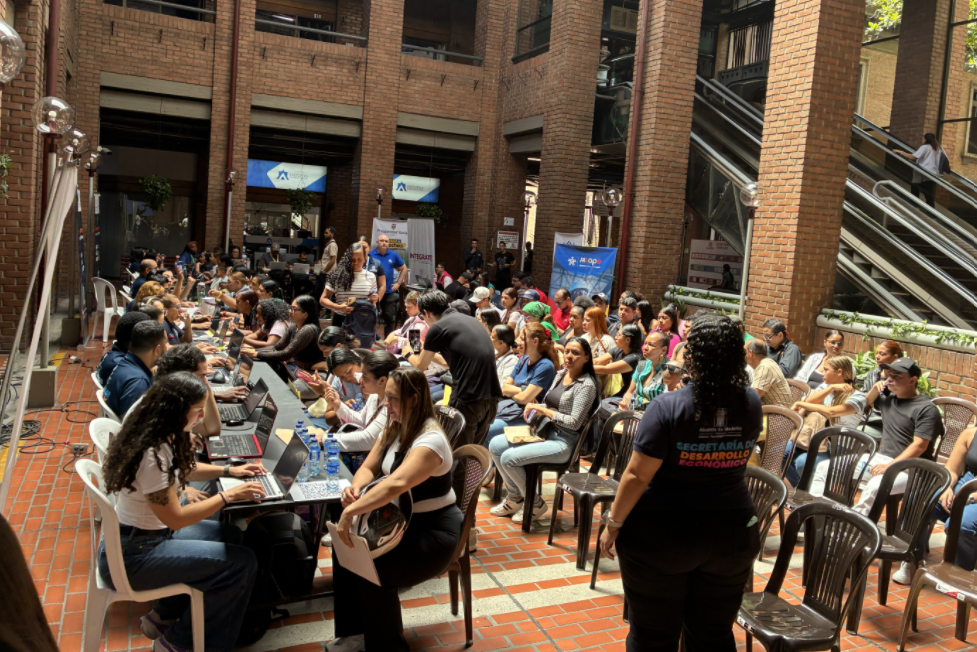
En el marco de la Gran Feria de Empleo para la población migrante, refugiada y retornada —realizada el pasado 27 de agosto en el Centro Comercial Villanueva de la ciudad de Medellín, gracias a la alianza entre TENT Colombia, la Alcaldía de Medellín y diversos aliados internacionales—, el factor idiomático y de comunicación dejó de ser una barrera para convertirse en el epicentro de la recolección de información estratégica. En este escenario, la labor de GO BILINGUAL resultó fundamental para tender un puente lingüístico preciso y eficaz.
¿Qué es TENT?
TENT (organización detrás de iniciativas como Tent Partnership for Refugees) es una red global de grandes empresas comprometidas en movilizar a la comunidad empresarial para conectar a la población refugiada y migrante con oportunidades laborales estables y dignas. Su propósito central es fomentar la inclusión económica de quienes se han visto obligados a huir de sus países de origen, ayudándoles a integrarse con éxito en el mercado laboral de las naciones de acogida.
Tent fue creada en 2016 por Hamdi Ulukaya, CEO y fundador de Chobani, una multimillonaria empresa de alimentos en Estados Unidos, con el fin de movilizar a los mayores empleadores del mundo, generando oportunidades laborales. En la actualidad, Tent es una red de más de 500 grandes empresas comprometidas a ayudar a refugiados y migrantes en once países de América y Europa a acceder al mercado laboral, ayudándoles a prepararse para el trabajo y conectándolos con oportunidades de empleo. Más información en www.tent.org.
La problemática de la migración venezolana a Colombia y las dificultades para encontrar empleo
La migración proveniente de Venezuela hacia Colombia ha constituido uno de los flujos migratorios más grandes de la historia reciente de la región. Si bien el país ha demostrado una notable vocación de acogida e implementación de estatutos de protección temporal, la población migrante y refugiada sigue enfrentando múltiples y profundas barreras estructurales para acceder a un empleo formal. Entre las principales dificultades se encuentran:
- La falta de convalidación o reconocimiento de títulos profesionales y técnicos, lo que relega a muchos profesionales a la informalidad o a empleos subcalificados.
- El choque cultural y los sesgos en los procesos de selección, que a menudo limitan las oportunidades de contratación directa.
- La escasez de redes de apoyo empresarial que entiendan y valoren las capacidades y el potencial productivo de esta población.
Cómo GO BILINGUAL facilitó la creación de Insights
Para abordar esta problemática de manera integral, no basta con abrir vacantes; es imperativo comprender a fondo las realidades, los testimonios y las necesidades de los asistentes. Es aquí donde GO BILINGUAL desempeñó un rol catalizador para la creación de insights de valor.
Durante la jornada, que se extendió entre las 8:30 a. m. y las 3:00 p. m., GO BILINGUAL proporcionó servicios especializados de interpretación simultánea inglés-español y un kit técnico completo (transmisor, 20 receptores, audífonos y soporte técnico). Gracias a esta infraestructura y a la interpretación profesional, se facilitó la participación fluida de delegados internacionales y se permitió que la directora de comunicaciones de TENT realizara entrevistas personalizadas y profundas a la población migrante.
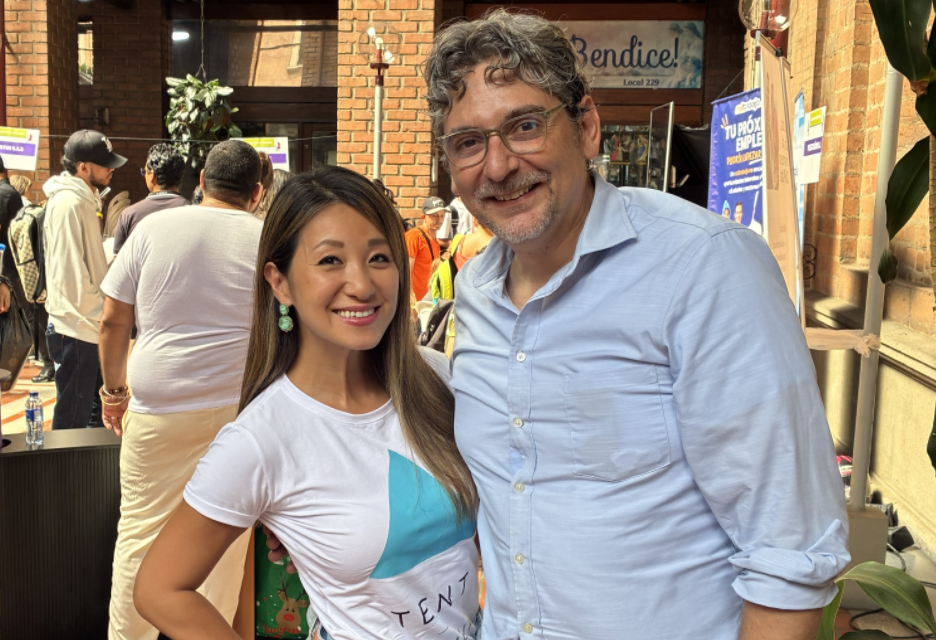
La presencia de Haiwen Lu Langworth, VP of Global Communications & Marketing at the Tent Partnership for Refugees (y con una sólida trayectoria previa en DAZN, Ketchum y H&K), aportó una perspectiva global invaluable a la jornada. Su liderazgo en estrategias de comunicación y posicionamiento internacional permitió destacar el impacto de la iniciativa en Medellín, asegurando que las historias y los retos de la población migrante y refugiada resuenen a escala internacional para inspirar a más corporaciones globales a sumarse a la inclusión laboral.
Al eliminar las barreras idiomáticas entre los actores internacionales, los organizadores y los propios migrantes, GO BILINGUAL no solo garantizó una comunicación efectiva, sino que permitió capturar historias de vida directas y datos cualitativos de gran valor. Estos testimonios se transformaron en insights cruciales para que las organizaciones y aliados dimensionaran las verdaderas necesidades del terreno, optimizaran futuras estrategias de inclusión laboral y fortalecieran la cooperación internacional en la construcción de oportunidades dignas en Medellín.
Breaking communication barriers: How GO BILINGUAL facilitated the creation of vital insights at the TENT Major Job Fair in Medellín
As part of the Major Job Fair for the migrant, refugee, and returnee population—held this past August 27 at the Villanueva Shopping Center in the city of Medellín, thanks to the partnership between TENT Colombia, the Mayor’s Office of Medellín, and various international allies—the linguistic and communication factor ceased to be a barrier and became the epicenter for gathering strategic information. In this scenario, GO BILINGUAL’s work was fundamental in establishing a precise and effective linguistic bridge.
What is TENT?
TENT (the organization behind initiatives such as the Tent Partnership for Refugees) is a global network of major companies committed to mobilizing the business community to connect refugees and migrants with stable and dignified job opportunities. Its core purpose is to promote the economic inclusion of those who have been forced to flee their countries of origin, helping them successfully integrate into the labor market of host nations.
Tent was created in 2016 by Hamdi Ulukaya, CEO and founder of Chobani, a multi-billion-dollar food company in the United States, in order to mobilize the world’s largest employers, generating employment opportunities. Today, Tent is a network of over 500 major companies committed to helping refugees and migrants in eleven countries across the Americas and Europe access the labor market, helping them prepare for work and connecting them with employment opportunities. More information at www.tent.org.
The problem of Venezuelan migration to Colombia and the difficulties in finding employment
Migration from Venezuela to Colombia has constituted one of the largest migratory flows in the region’s recent history. Although the country has demonstrated a notable commitment to welcoming migrants and implementing temporary protection statutes, the migrant and refugee population continues to face multiple and deep structural barriers to accessing formal employment. Among the main difficulties are:
- The lack of validation or recognition of professional and technical degrees, which relegates many professionals to informality or underqualified jobs.
- Cultural clashes and biases in the selection processes, which often limit direct hiring opportunities.
- The scarcity of business support networks that understand and value the capabilities and productive potential of this population.
How GO BILINGUAL facilitated the creation of Insights To address this issue comprehensively, simply opening job vacancies is not enough; it is imperative to deeply understand the realities, testimonies, and needs of the attendees. This is where GO BILINGUAL played a catalytic role in generating valuable insights.
During the event, which ran between 8:30 a.m. and 3:00 p.m., GO BILINGUAL provided specialized English-Spanish simultaneous interpretation services along with a complete technical kit (transmitter, 20 receivers, headphones, and technical support). Thanks to this infrastructure and professional interpretation, the smooth participation of international delegates was facilitated, allowing TENT’s communications director to conduct personalized and in-depth interviews with the migrant population.
The presence of Haiwen Lu Langworth, VP of Global Communications & Marketing at the Tent Partnership for Refugees (and with a solid previous track record at DAZN, Ketchum, and H&K), brought an invaluable global perspective to the event. Her leadership in communication strategies and international positioning helped highlight the impact of the initiative in Medellín, ensuring that the stories and challenges of the migrant and refugee population resonate on an international scale to inspire more global corporations to join labor inclusion efforts.
By eliminating language barriers between international actors, organizers, and the migrants themselves, GO BILINGUAL not only guaranteed effective communication but also captured direct life stories and high-value qualitative data. These testimonies transformed into crucial insights for organizations and allies to gauge real ground-level needs, optimize future labor inclusion strategies, and strengthen international cooperation in building dignified opportunities in Medellín.